
Alternative Data Weekly #252
Theme: Its the domain expertise that matters

Special thanks to our sponsor:

Contact Michiel Maaskant to learn more.
QUOTE
“And building doesn’t always mean using a platform. Sometimes it’s just knowing how to prompt an AI to help you think through a tough decision, role-play a difficult conversation, or break down the housing market so you can figure out your next move.” - Daria Cupareanu
News
Pods
Charts
Final Thoughts (How are you adding value?)

#1 – Seb Murray published Study: Generative AI results depend on user prompts as much as models. August 2025.
My Take: I might go as far as to say the question (prompt) is the moat. Key skills in the future will be domain expertise and knowing the right question to ask at the right time.
“The best prompters weren’t software engineers, they were people who knew how to express ideas clearly in everyday language, not necessarily in code.”
#2 – Ben Lorica published The data flywheel effect in AI model improvement. August 2025.
My Take: I am intrigued by this idea that whatever model or version of “AI” you are using today, is the worst version of AI you’ll ever use again. It can only get better, right? The author uses the analogy of training a pet vs training an intern. The pet is judged on outcome (“sit” or “stay”)… while an intern is more like mentoring with feedback along the way.
“The key was shifting from binary feedback on final outputs to granular guidance on reasoning steps, allowing users to identify and correct subtle logical errors that might be missed when evaluating only end results.”
This article caught my eye because of the term “flywheel”. In the world of model training, this term means applications can dramatically increase the speed at which they improve as they automatically generate the next training input.
There are many takeaways here, but the increasing importance of domain expertise is a common theme. You need to have a deep understanding of whatever your domain is, to be sure your applications or agents are moving in the right direction.
#3 – Nitasha Tiku of The Washington Post published AI systems ‘ignorant’ of sensitive data can be safer, but still smart. August 2025.
My Take: I get the argument. I just have no idea how anyone can monitor all data sources and determine what is “sensitive”. The author uses as an example models that contain data that can be used to build bioweapons. Of course, no one wants bad people to use AI to learn how to build bioweapons, but is all the information that goes into the process considered “sensitive”. I just don’t know how you execute on such a program.
BONUS: Clay’s Series C The GTM engineering era begins now. I’ve been reading a lot about ”GTM engineering” in recent weeks. It seems to be the newest hot thing. I’ve always thought that engineering is more art & and sales is more science. Perhaps AI is giving increased attention to the fact that sales can be a very engineered process.
This relates to Charles Poliacof & Stan Altschuler’s article about how “systems of record” and “systems of action” will merge. This makes it much easier for sales to feel like sales while still adhering to the strict process that largely determines the success of your sales motion.
What else I am reading:
Lisa Palmer published AI is eating old school advising and consulting firms. August 2025.
Hugh O’Connor published Why Your Data Strategy Keeps Stalling (And It's Not What You Think). August 2025
Resham Kotecha published The Future of Data and AI Governance: Insights from our expert panel. August 2025.
Derek Slager published The next big thing in AI is agents, but is your data ready?. August 2025.
Bradley Saacks published Government data is now in question. Here's where macro investors are turning to fill the gaps. August 2025.
Dilpreet Kaur published From Chaos to Clarity: Making SEC Filings LLM-Ready. July 2025.
Jessica Margolies published Carbon Arc: An Origin Story. August 2025. Related post from Carbon Arc co-founder Kirk McKeown.

Source: Ana Moya interviews Maximilian Harms from Dataiku. Data Innovation Podcast – Episode 18: Agents as Shells? A Deep Dive into AI Orchestration. August 2025.
My Take: There was a good discussion of agents as “pure shells”. I took this to be similar to an orchestrator. Something to keep everyone moving in the same direction and not spiraling out of control.
Control is a difficult thing. AI offers a lot of opportunities, but someone needs to make sure people are using good data and not accessing information that, in the wrong hands, might be sensitive.
Highlights (32-minute run time)
Minute 01:30 – interview starts; Max background
Minute 00:00 – Dataiku background (1,400 people)
Minute 06:30 – core customer profile & broad discussion of AI
Minute 10:00 – favorite functions of Dataiku
Minute 17:00 – Agents as “pure shells”
Minute 20:00 – LLM vs ML; example
Minute 24:30 – discussion of risks (keeping a human-in-the-loop)
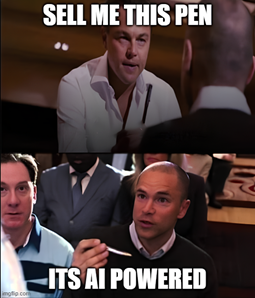
There is a lot of this sentiment out there in the world:

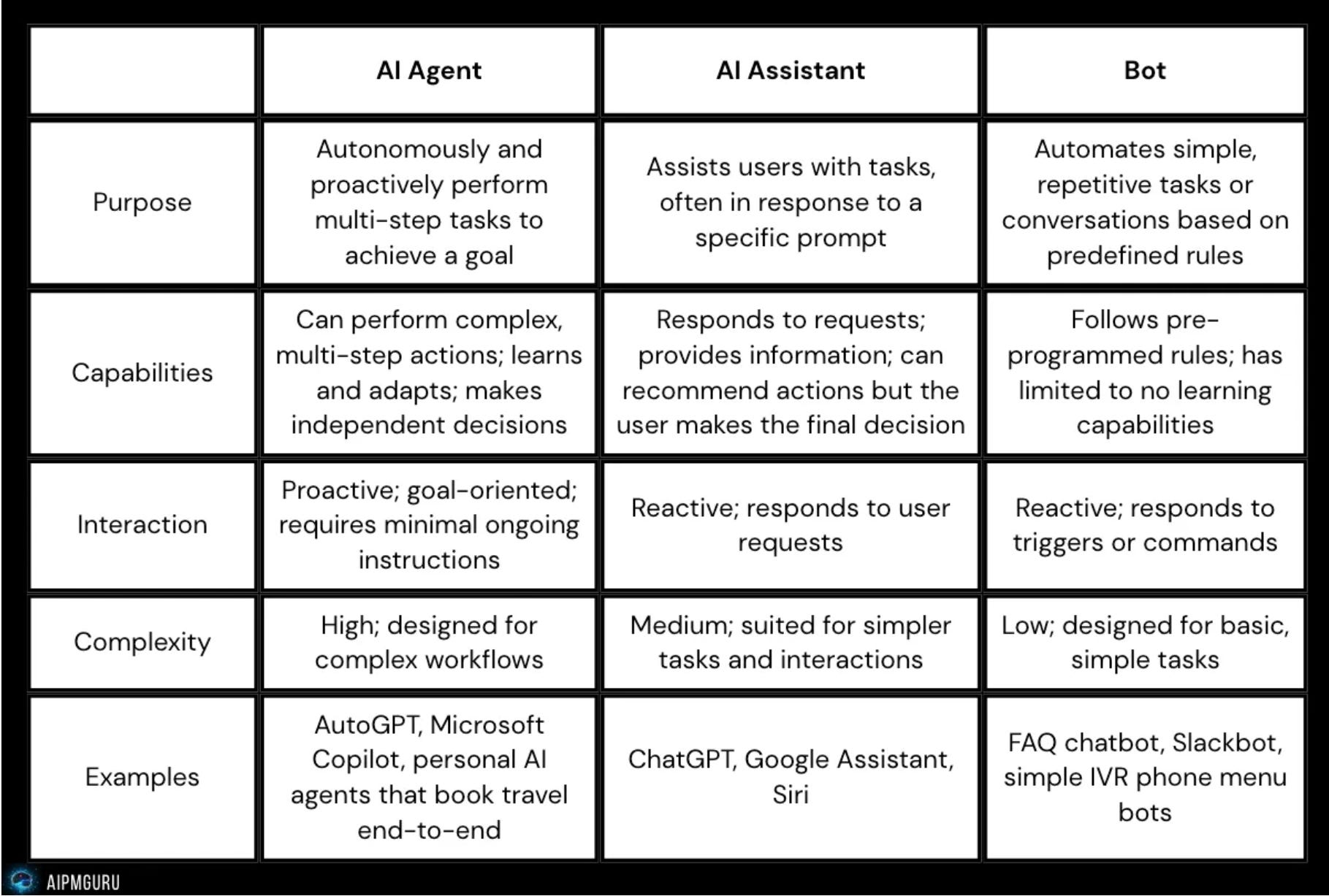
Source: Shailu Guru published The AI Agent PM: Why This Role Will Define the Next Decade of Product Management. August 2025.
“I think most people are still confusing AI agents with simpler AI tools, which is why they're missing the massive opportunity here. The distinction isn't just technical - it's about fundamentally different product paradigms. Here's how I see the landscape:”

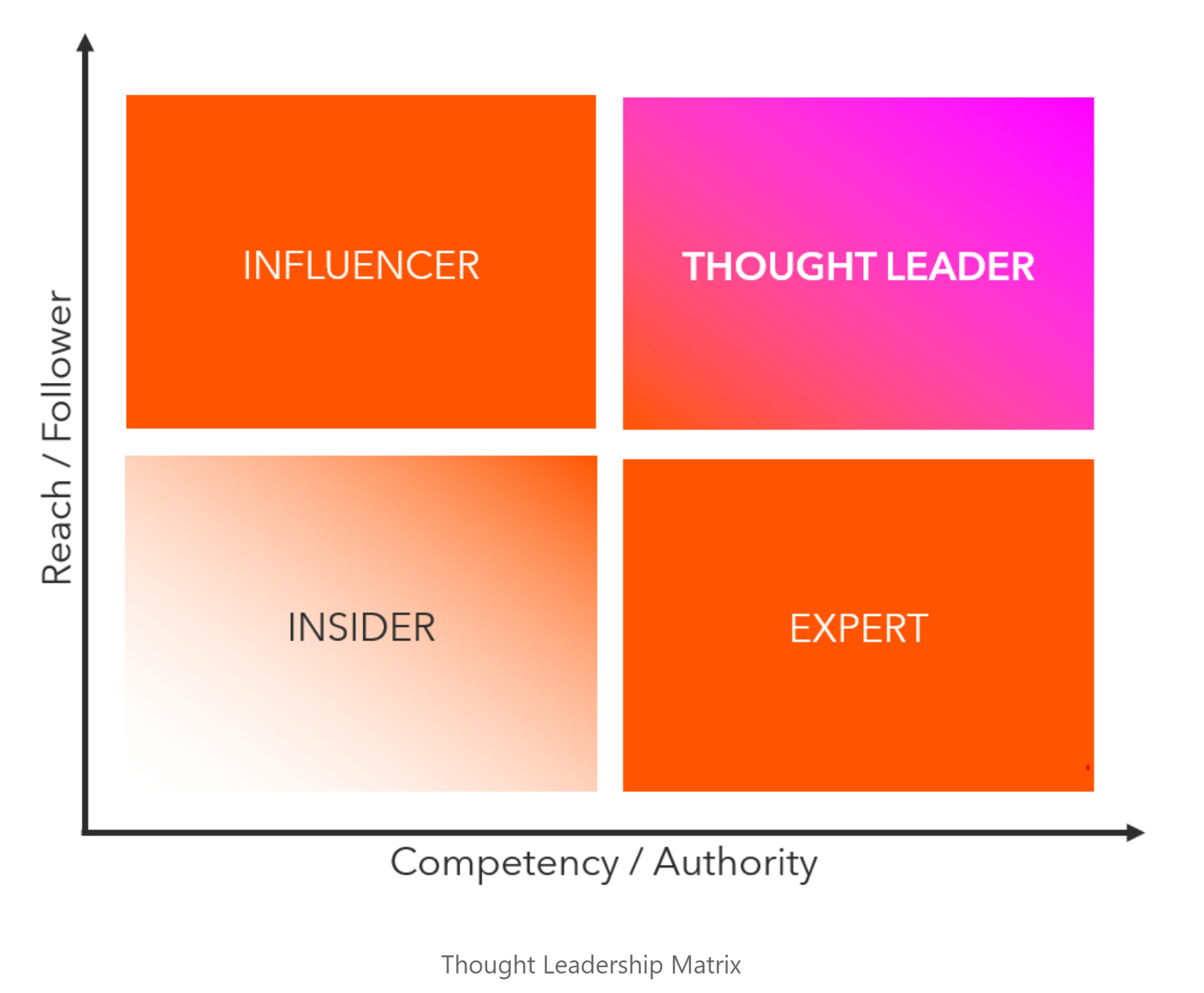
Bonus: Peter Baumann published Thought Leadership in Data & Analytics. August 2025.
I thought this was interesting. I think all four quadrants play a role in advancing progress in the data/analytics world. With the dawn of AI, there is a lot of room to brainstorm and try new things.
I think it was Naval who said that if you can build things (i.e. you have some technical talent and creative capability), then you should be building things. If not, you should be creating & sharing ideas in public to move the discourse forward.
It will be very interesting to see where value flows (data ownership, models, vertical-specific AI tools, perhaps something no one has thought of yet).
From Peter:
My personal (Peter’s) understanding would be:
INSIDER - Being someone, knowing something – it is not always about the professional job you are doing. But it is about what we do.
EXPERT - Being an expert means for me, having deep experience in your field. Trained and worked for many years. But it is possibly more than that. Having a passion for something and the will to do things better and learn to get better.
INFLUENCER - Coming from the insider position an influencer gains attention for something she or he did. Being able to communicate and reach a lot of people with what you have to say.(JF: this is where I try to fit today).
THOUGHT LEADER - Bringing together a high reach with a high expertise, enables you to drive change. To shape your field. To use the visibility to make statements and communicate a message. (JF: this is where I strive to be).
Appreciate the mention!