
Alternative Data Weekly #267
Theme: The data *is* the business; even the government is figuring this out.

Special thanks to our sponsor Maiden Century.

Quickly identify the highest-signal datasets for the companies and KPIs that matter most to your investment process - say hello@maidencentury.com to learn more.
QUOTES
“Central bankers are tapping nontraditional data sources for a more complete picture of the economy.”- Claudia Sahm
News
Pods
Charts
Final Thoughts (Workflows)

#1 – Vipin Gopal, Tom Davenport, and Randy Bean published Why Your Company Needs a Chief Data, Analytics, and AI Officer. December 2025.
My Take: Thought leaders, like this trio of authors, are seeing successful companies align “CDAIO” leaders with business functions rather than back-office functions.
Data is increasingly being seen as a key business asset.
AI outcomes improve when those implementing have an intimate knowledge of the business & business workflows. Pulling together those data functions under one leader, empowered to make things happen, is how successful organizations are structuring themselves.
#2 – Azeem Azhar published Ten Things I’m Thinking About AI. November 2025.
This is a four-part series:
Park 1: The Firm
Part 2: Physical Limitations
Part 3: The Economic Engine
Part 4: The Macro View
My Take: The author reflects on thoughts as we approach (and now pass) ChatGPT’s 3rd anniversary. I appreciate the level of thought that goes into something like this. This is really impressive.
Of most interest to me is the fact that the AI-related revenue is real and growing quickly. We have moved beyond the early adoption phase. That said, there are real physical (i.e., energy) limitations to AI’s growth.
I’ve said in the past that if the reward is big enough (and it is), this limitation will drive innovation. Human ingenuity to the rescue!
#3 – Amadeo Alentorn published Jupiter’s Amadeo Alentorn: Power of alternative data revealed by US shutdown. November 2025.
Related: Megan Leonhardt published The U.S. Needs Better Data. Why We Fell Behind and How We Can Catch Up. November 2025.
My Take: The US Gov’t shutdown showed us that the US needs a data upgrade. This has been a recurring theme for readers of ADW since the shutdown started.
The way data is collected and utilized needs to change to keep up with the changing world. The government will be slow to act. This is an opportunity for alternative data providers.
Institutional investors will need to predict what the government agencies will publish (no matter how bad the information) because that is what the markets react to. But this does not change the fact that, today, institutional investors can get a better sense of the real economy than the government is able to generate by using more advanced data and data practices.
#4 - Claudia Sahm published Alternative Data and Monetary Policy. December 2025.
My Take: Related to the above articles about our governments & policy-makers attempting to upgrade their outdated data. Improved timeliness and granularity of non-traditional data sources give policy makers better tools to do their jobs.
Better data = better policy outcomes.
BONUS: Qualitrics published Market Research Trends Report 2026. November 2026. AI is rapidly changing the way market research is done (see AskRally). ‘‘ Synthetic data became our ‘cultural radar’—cutting research timelines from a week to hours while giving us confidence to test messaging against emerging trends. The blended approach lets us move faster on early stage testing, then validate high-stakes decisions with human panels.” (page 18)
What else I am reading:
Lombard Odier published The new face of Black Friday: AI, alternative data, and the rise of Chinese e-tailers. November 2025.
Matt Ober published Inside the shift toward data-native markets. December 2025.
The Data Detective (Prashant Tandan) published How Conway’s Law Quietly Shapes Every Data System You Build. November 2025.
Nyela Graham published Jump Trading spinoff Pyth enters institutional market data. November 2025.
Soren Larson published Illiquid Dark Matter. November 2025.
Cameron Partridge published AI is running out of data. So, who benefits next?. November 2025.
Dan Averbukh published Why Quants Pay More for Point-in-Time Data. November 2025.
Sven Balnojan published You don’t have 47 data problems. You have one. November 2025.
Many people published Agentic Artificial Intelligence in Finance: A Comprehensive Survey. November 2025.
Ethan Aaron’s published his predictions for the next 2 years (here). November 2025.
My Favorite is #7 – in-person events continue to become more and more important
Also #3 - Most of the AI innovation in the next 2 years won’t come from models. It’ll come from incorporating AI into real workflows.

Source: The Data Trust Maturity Curve: The Foundation of Data + AI Reliability
In this opening keynote fireside chat, Barr Moses, CEO and Co-Founder of Monte Carlo, and Sol Rashidi, former Chief Analytics Officer and current enterprise AI leader, unpack the evolution of data trust: from early data quality initiatives, to modern data observability, and now toward true AI reliability.
AI’s potential is limitless—but only as strong as the data that fuels it.
My Take: While not a traditional podcast, I thought this was interesting enough to review. These are the opening remarks from Barr Moses & Sol Rashidi.
This is fundamental and foundational for every business.
We find that many times, customers of data know what they don’t want, but don’t know what they actually want.
The directive for data professionals has shifted from governance, trust, observability, security, etc, to … now everyone is being tasked to “go do AI”.
Really, what we should be focused on is this big list of things that need to be addressed to deliver trust (minute 12:30).
Many different use cases of risk that deal with scaling AI use cases.
“Unknown unknowns are far greater with AI” – 14:00 Barr Moses
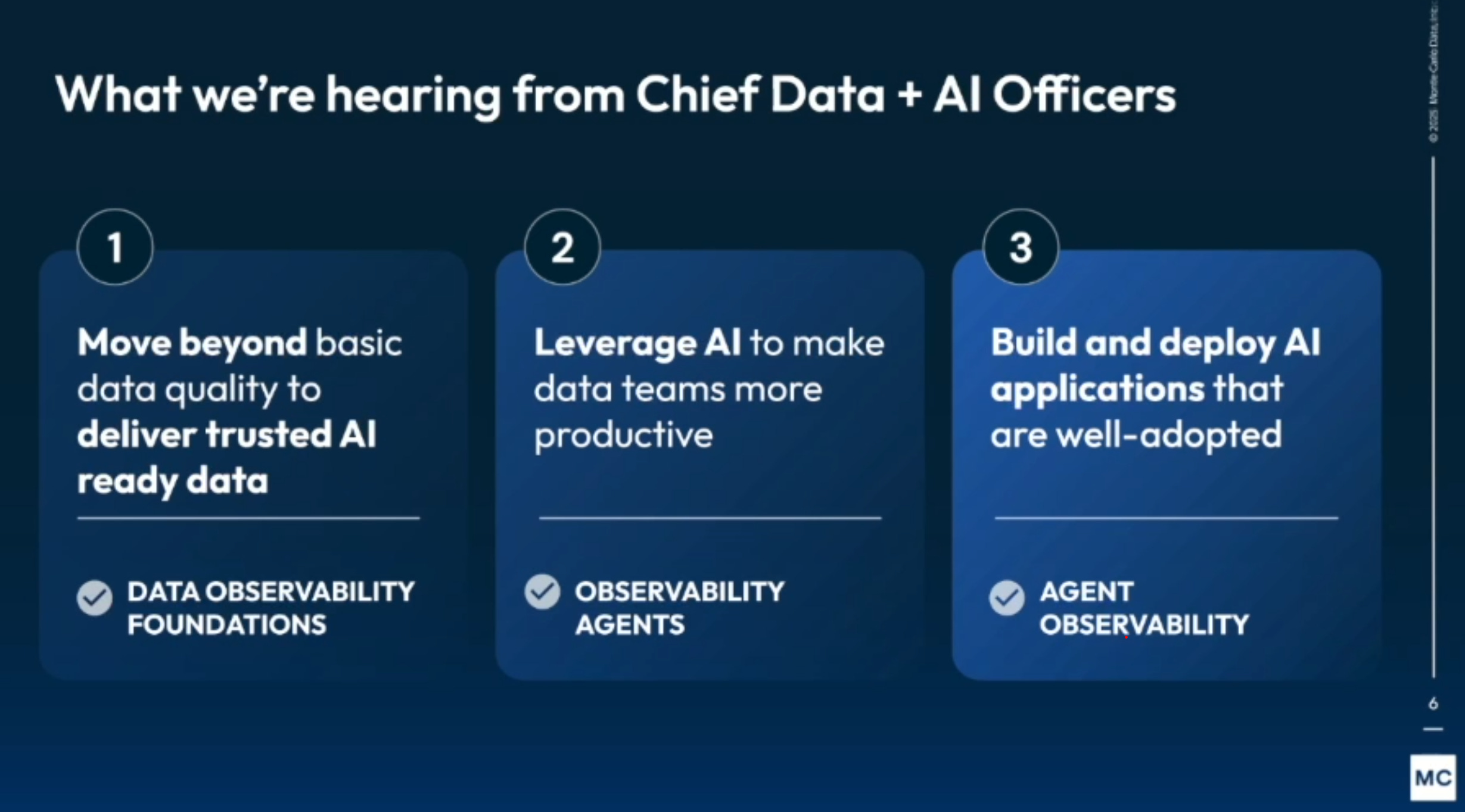
What signals should companies be watching for to move to the next steps? First, know that data quality will never be perfect (18:00), but we should rank the most important:
Tier 1 – impact business if not quality (the goal is 100% data quality here).
Tier 2 – Some downstream impact, but no revenue impact if the data is of low quality.
Tier 3 – Operational … data needs to be good, but doesn’t need to be perfect.
Three levels:
High – cultural (what was our AI literacy) and relevance ROI (if we don’t do this now, how are we positioning ourselves in a few years?)
Medium – performance, prevention, prediction (how much etter in accuracy have we gotten?
Granular – many metrics … see book on Amazon … data to model yield, prompt leakage rate, etc.
Highlights (34-minute run time)
Minute 00:15 – intro message from Barr Moses
Minute 02:30 – intro to Sol Rashidi & background
Minute 08:30 – data & AI trust / reliability; what does this mean?
Minute 13:30 – AI governance and security is like buying insurance
Minute 14:30 – Trust maturity curve (see picture)
Minute 18:00 – Three tiers of data quality priority
Minute 23:30 – Addressing the ROI of data and data products
Minute 31:00 – Final thoughts

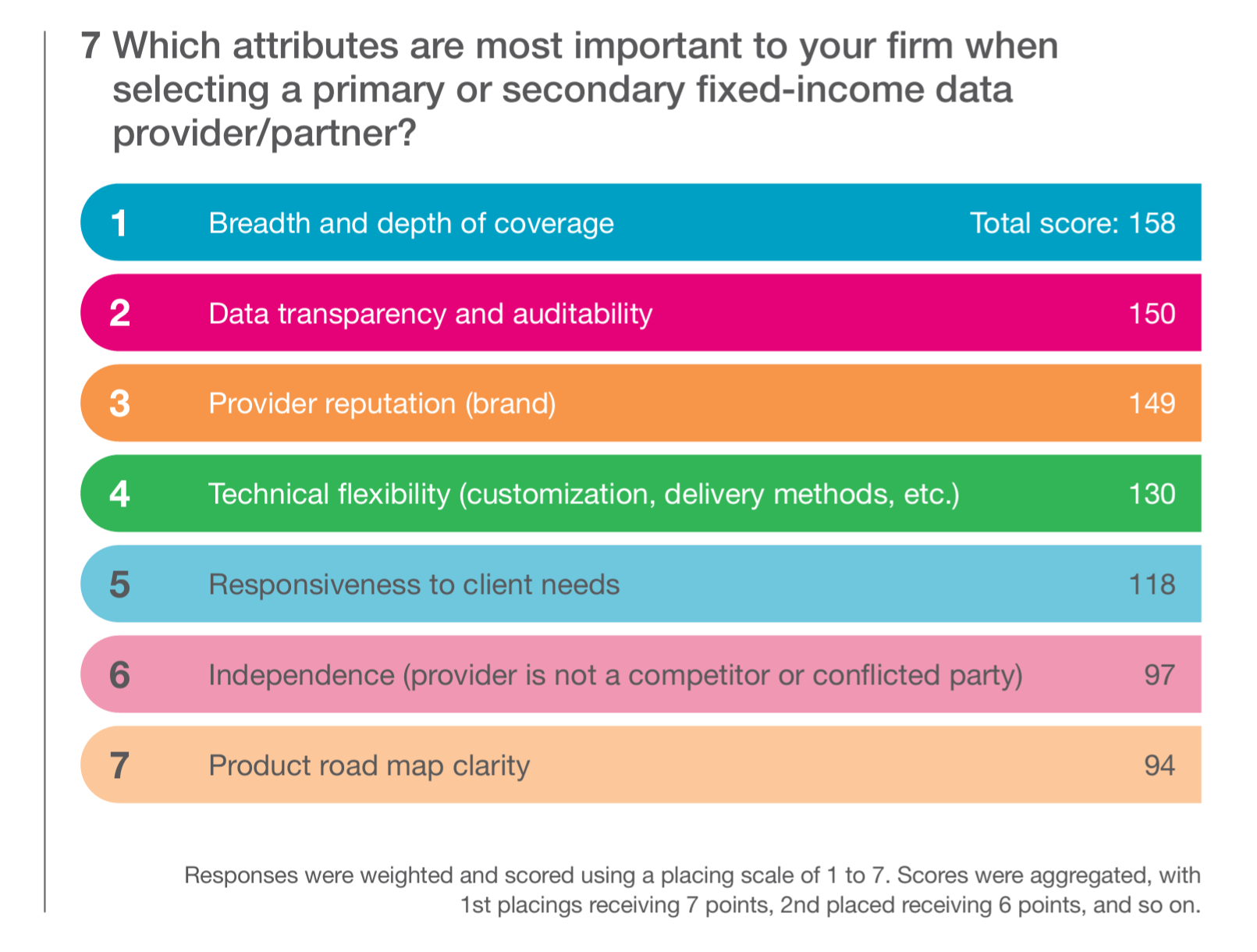
Source: Six Group published Fixed Income Data Continues to Challenge Capital Markets Firms. September 2025.
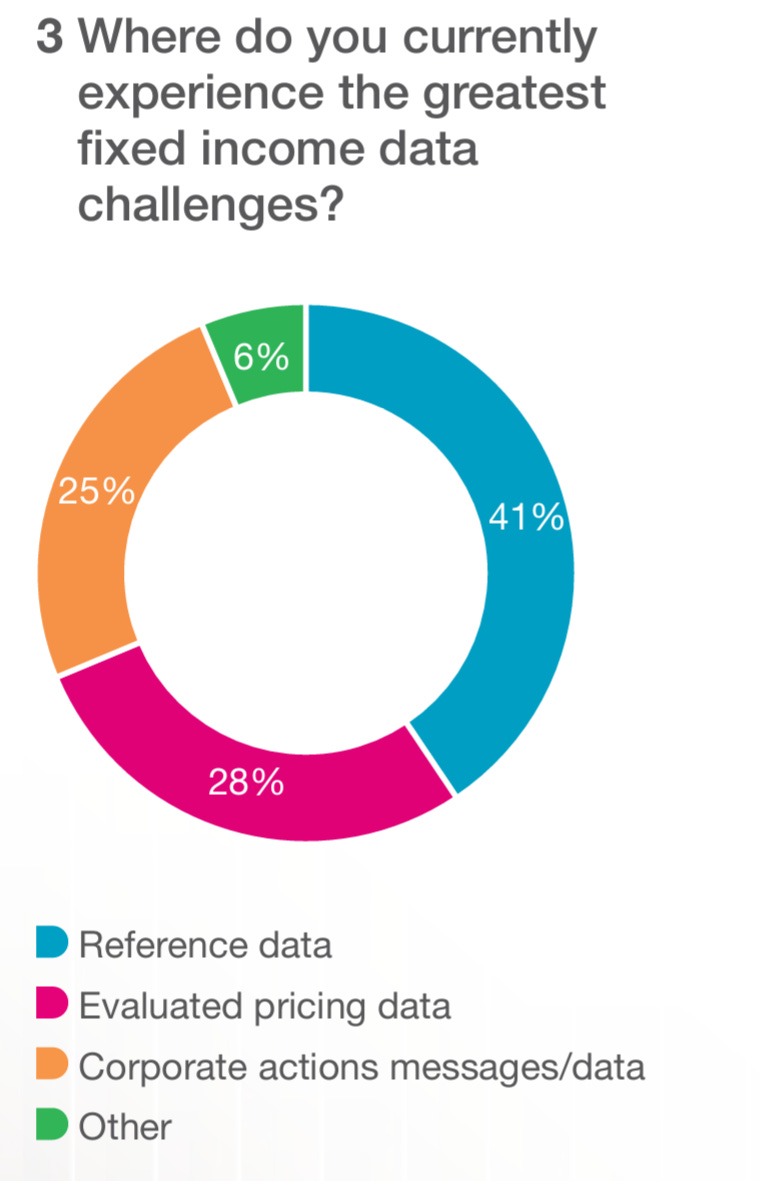
The results show that 41% of respondents reported challenges associated with reference data, an unsurprising finding given the critical role reference data plays in determining the quality of firms’ corporate actions and evaluated pricing functions:
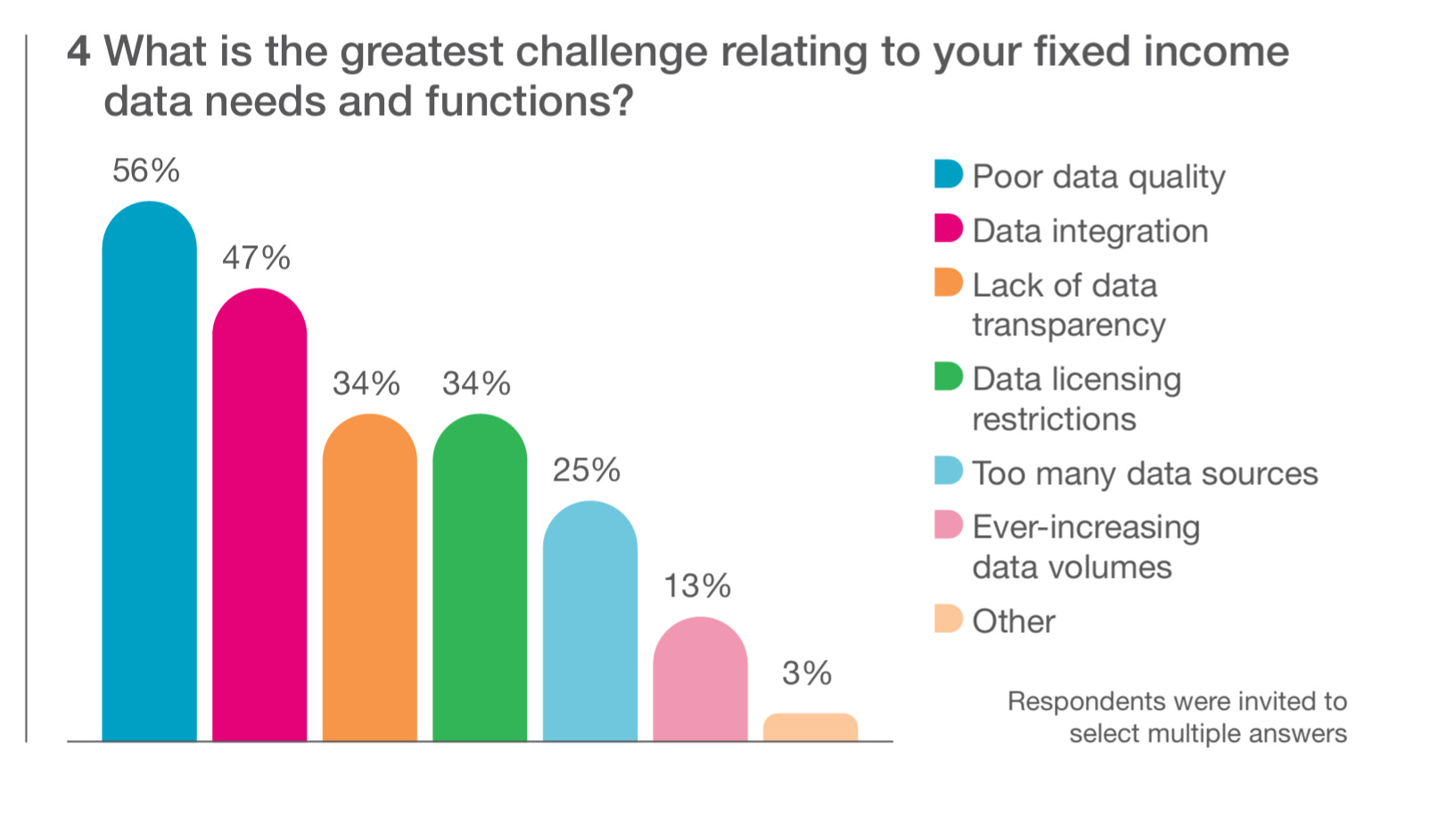
Poor data quality and data integration challenges emerged as the two most pressing issues, while a lack of transparency and data licensing restrictions also featured prominently, underlining the variety and ubiquity of fixed income data challenges facing market participants:
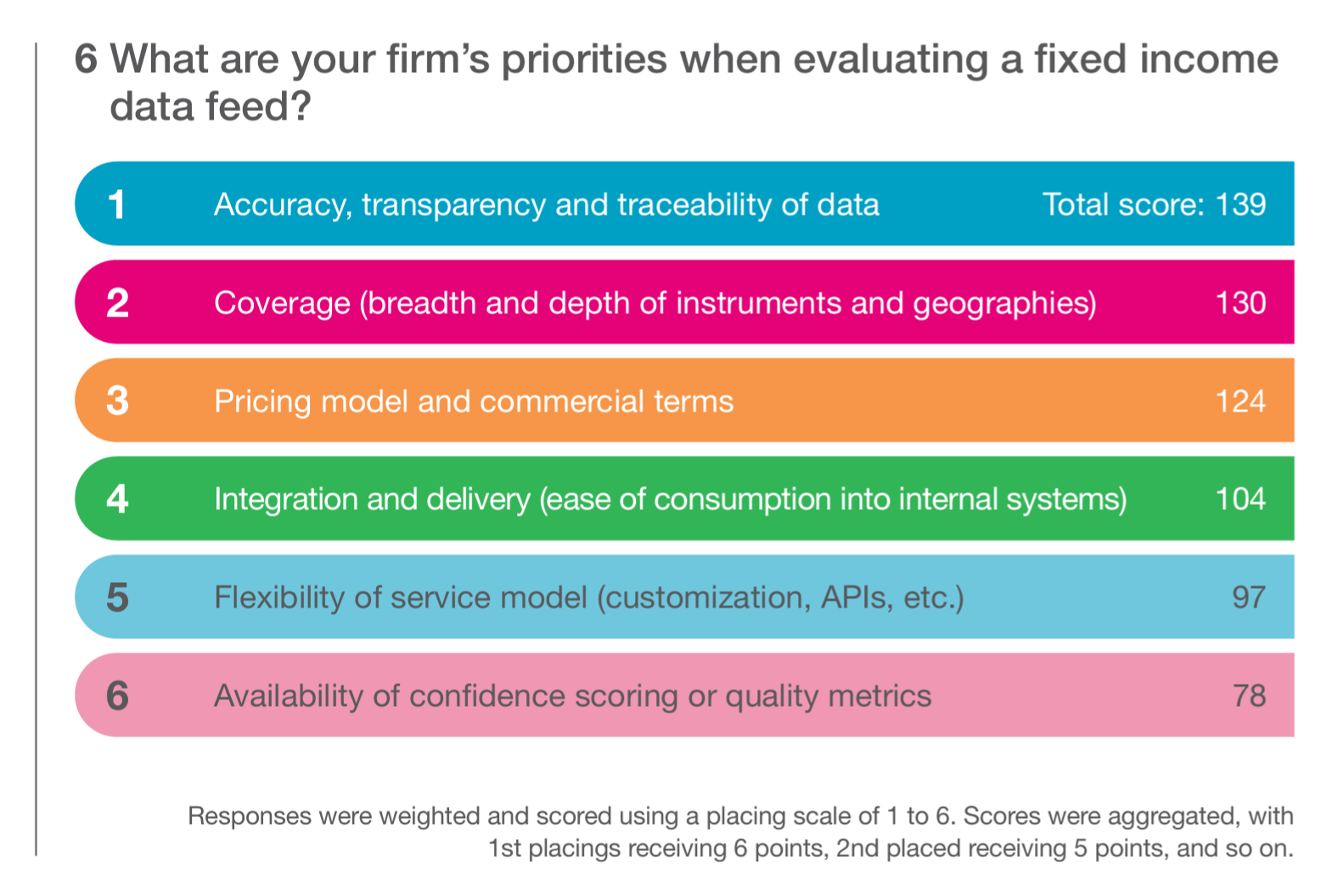
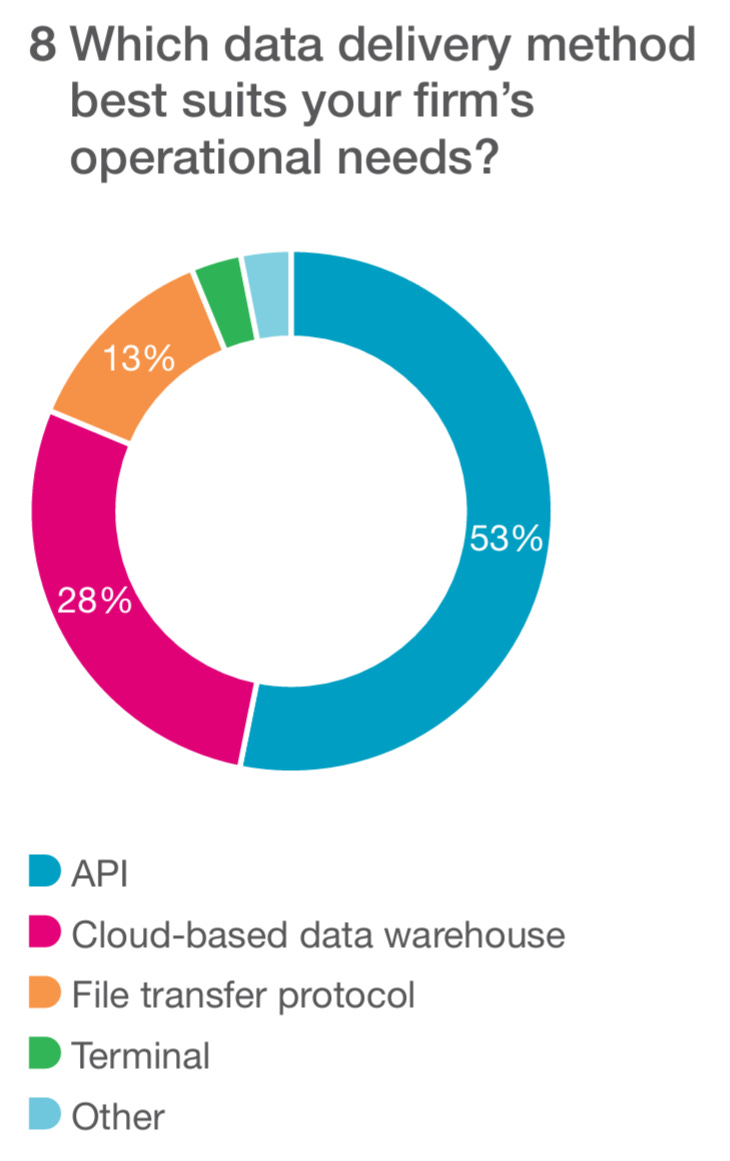
APIs emerged as the favorite (53%), underlining the crucial role they now play in capital markets firms’ data consumption activities, enabling realtime, automated access to large, complex datasets and seamless integration with downstream trading systems, analytics platforms and risk tools:

Workflows.
I repeatedly see, while preparing this weekly ADW, & experienced while at ModuleQ, the growing importance of understanding your workflow.
People who truly understand what they do, and HOW they do it, are best positioned to benefit from the AI tools being developed today.
Rather than “prompt engineers”, we will all become “process engineers”!
Most humans think what they do is very unique. There are many inputs to what I do and why I do it; there is no way anyone could develop a prompt that would be good enough to replicate my system. Which, in reality, is not really a system at all.
Most of us randomly react to various inputs, applying “institutional knowledge” & “common sense” to our response, all while trying to make progress toward whatever goal we are working towards.
This is why those AI systems that “watch” what you do, and learn over time the nuances of your “what” and your “why”.
It will take time, but this will happen.
“AI won’t take your job, someone using AI will take your job.”
I would add, “someone using AI (and who really understands your workflow) will take your job.”