
Alternative Data Weekly #274
Theme: From data products to data plumbing. Where the value lives.

Thanks to our sponsor Sequentum!

Sequentum's Web Scraping Agents: AI-Augmented Creation, Web Unblocker and Built-in Pagination with Visual Editor for Atomic Customization – Sign up for your FREE TRIAL of Sequentum Cloud.
QUOTES
“Because data, analytics, and AI are capabilities that no one person owns. Everyone owns them.” – Sol Rashidi
News
Pods
Charts
Final Thoughts (My Job Hunt)

#1 – Brian Jin published A Porter’s Value Chain for Data Operations. January 2026.
My Take: I like this idea of defining the value of data. Everything leading up to the value creation moment (the decision) is designed to “protect that moment” or, in my words, make sure the question is answered accurately. Good governance makes sure this happens.
“Governance is not something you add to data work. It is the operating model that determines how data work actually happens.”
#2 – Chen Assayag Kedem published The Alt Data “Gold Rush” is over. January 2026.
My Take: Wait, there was a gold rush? Ha! I agree that the age of the stand-alone single data product startup is done (I unsuccessfully tried that with my former company 90 West Data).
Everyone is figuring out that there is value in data. Hold that. Everyone knew there was value in data, but we are just now seeing the tools made available that make that value readily accessible. This is the wave that is starting to break. The next gold rush.
The data assets that are demonstrating the highest value as access eases, are those “infrastructure data” referenced in the article (I’ve called this “table stakes data”). This is going to become extremely valuable, thus the increased M&A.
“If you provide the source of truth that the market cannot legally or physically turn off, you have a bond-like asset that ages better than any software.”
#3 – Mary Pratt published Top 8 observability trends to watch in 2026. January 2026.
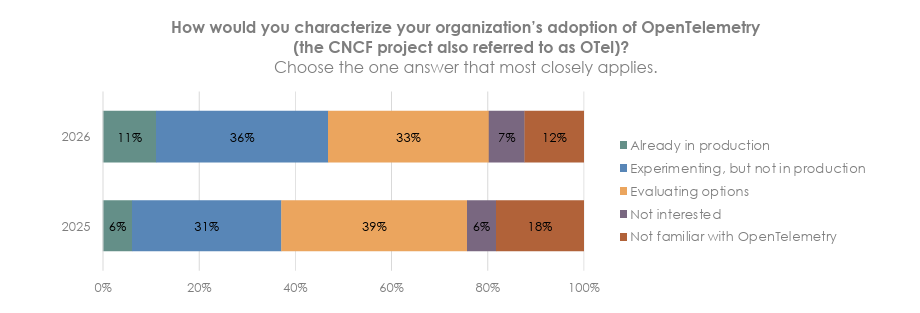
My Take: This article cites the Elastic report: The Landscape of Observability in 2026. My favorite is #3, the importance of trust. “The more we observe, the more we trust”. Trust is so easily lost in the data world, it is important to get right. I also selfishly hope #5 is correct: There will be more uptake of OpenTelemetry. This trend is huge for the product we are building at SymetryML (we make it much more efficient, much more effective, … just better … to get insights from telemetry.
What else I am reading:
Dan Evans published You Didn’t Build a Data Capability — You Built a Dashboard Factory. January 2026.
Confluent published 2026 Predictions. January 2026.
Sol Rashidi published C-Suite Leadership Taught Me This: You Don’t Lead AI, You Herd It. January 2026.
Beth Pariseau published Dynatrace DevCycle buy continues observability consolidation. January 2026.
Matthew Bernath published New products, community momentum and where real data revenue is coming from in 2026. January 2026.
Tim Osborne published AI Reliability Maturity Curve — The Journey to Production AI. January 2026.
Mary Pratt published Top 8 observability trends to watch in 2026. January 2026.

Source: Internet History Podcast | The History Of Datadog, With Founder, Olivier Pomel. December 2025.
My Take: This was a good one. I like getting historical context and background, as it helps understand why things are the way they are.
Three things I thought were particularly interesting:
First. Solve the right problem.
Your users are not always the buyers. This makes it easy to get the wrong signal about what the market needs.
Operations sign checks.
Developers build with tools.
You need to talk to both personas.
Early on, the DataDog team spent A LOT of time talking to customers (being in NY helped with this) to make sure we were building the right product to solve the right problem.
Second. The key KPI is revenue retention. The company intentionally signed very short-term, month-to-month contracts to shorten the feedback loop. As a result, they got feedback very quickly. Is the product good enough?
Third. The need to educate the customer. This was a new space. They intentionally grounded the future in a past language that customers were used to. When your product fits into an existing category, it makes it easier to get budget. Make it as easy as possible for users to explain to operations why they need to buy.
Bonus: What “frontier problem” most obsesses Olivier? Automating everything with AI. How to not get awakened in the night to fix something. Make the AI fix the errors.
Highlights (52-minute run time)
Minute 05:00 – interview starts; Olivier Pomel, cofounder/CEO of Datadog background
Minute 15:00 – DataDog’s founding story
Minute 26:00 – the struggle selling the idea to NY early-stage investors
Minute 28:30 – GTM strategy & finding PMF (product market fit)
Minute 31:00 – building the right product (charge for your product)
Minute 32:30 – brute forcing it vs responsible growth (Key KPI)
Minute 35:00 – the need to educate the customer
Minute 37:00 – scaling; dealing with insane data volumes
Minute 41:00 – get acquired vs staying solo/IPO
Minute 45:00 – frontier problem that most obsesses you (automating everything with AI)
Minute 46:30 – NY tech ecosystem
Minute 48:30 – Europe startup scene thoughts

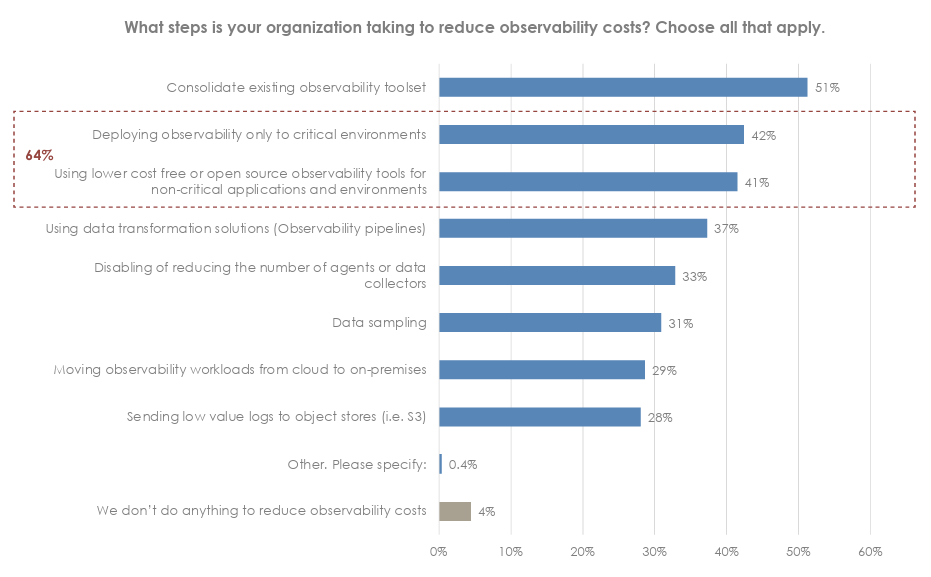
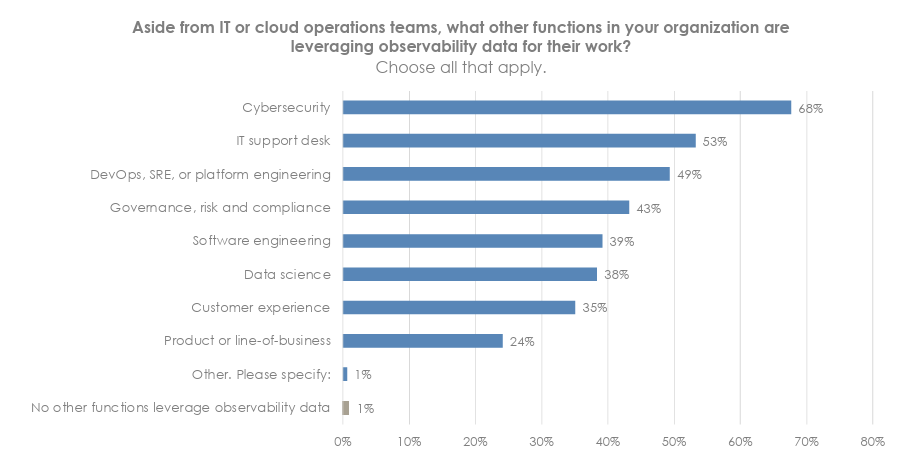
Source: Elastic published The Landscape of Observability in 2026. January 2026.

My thoughts on the job hunt.
My LinkedIn profile for reference.
Having just gone through a job search after ModuleQ dissolved, I was reminded that careers aren’t linear, especially in startups. As loyal readers know, I also like Top Ten lists.
Here are ten takeaways from my job search.
Start looking right away. There is a short period of time when people are curious (“what the hell happened!?!”). Everyone wants to help, but there is a waning of momentum that naturally occurs.
Build your personal brand before you need it. Find a way to add value to your professional community. Start by doing what you like about your job in public. Do this now. In my case, consistently publishing ADW mattered more than a resume. It was proof of work.
Invest in relationships. It’s much easier to ask for help when you’ve already shown up for others. Check in. Be useful. Look for opportunities to help others whenever you can. It is a real blessing when you find yourself in a spot where you can help someone. Do it. Actively seek those opportunities.
Ignore your ego. Everyone has an ego. This process can be hard on the ego. Treat it as a once-in-a-lifetime (hopefully) opportunity. If you’re in startups long enough, this will happen. If it never does, you probably aren’t pushing hard enough.
Geography matters less now than ever. There is a huge benefit to being proximate as a team, but this matters less now than ever.
Get yourself in shape. If you find yourself outside your normal work routine, take the opportunity to hit the gym (& work hard while there). This will help as much as anything you do.
Learn about a new tool. Find a new tool and go deep. Become a power user.
Show, don’t tell. Give feedback. Many times, new hires are those people who force themselves into the role of power user & design partner.
Spend less than you make. If there is less financial pressure, you can take your time and make a good decision, rather than needing to find a job (any job!) to pay bills.
There is a ton of opportunity in the world. Wow!
I found these articles helpful:
Sidwyn Koh published What To Do When Layoffs Hit Your Company. January 2026.
I like that he said “when”, not “if”. Unless you are extremely lucky, you’ll be involuntarily removed from a role at some point in your career.
I’d add (to the author’s #4) that you should start now. Build your professional network and build your personal brand.
Pass it along. Help the next person.
NextPlay’s Advice for generalists who want to join startups
The key is “show not tell.” Rather than telling someone you want to work for them, use their product in a new way and become a power user.
"Be so good they can't ignore you," - Steve Martin
Frankly, if the product isn’t good, but for some reason you still want to join the company, share your thoughts on how to make it better. If you are afraid they’ll “steal” your ideas, that would be an interesting indication of the type of company they are building, and it would be a good oversight on your part.
How to get into AI for Non-Technical Late Bloomers: A Beginner’s Guide (good overview)
Thanks John for linking my post.