Alternative Data Weekly #283
Theme: Your data product looks a lot like a CSV file

Special thanks to our sponsor Carbon Arc.

Predicting, investing or researching: Dive into medical claims, card spend, foot traffic, trade claims, TikTok shop, point of sale and many more data assets. Ask questions in natural language, get unique insights and enhance your theses using structured results.
Get started with a month free using the coupon code ADW30.
QUOTES
“a data strategy is a data-focused articulation of the business strategy (aka the goals and direction of the organization)” – Dylan Anderson
News
Pods
Charts
Final Thoughts (adding value)

#1 – Dylan Anderson published Issue #53 – Relevance of Business Models for Data. March 2026.
My Take: Understanding your business well enough to build an impactful data model is harder than expected. How will the data you are collecting and processing help the business? This is the key question. The technical part can be fun & interesting, but unless it specially adds value to the business, you risk being a science project rather than a key piece of the business.
“The simplest question is ‘does this product help us create, deliver, or capture value better?’”
When people talk about AI taking all the jobs, the opportunity for “data people” to be curious about the business they work for is massive. Being able to articulate to colleague what you are doing and Why you are doing it in terms of the overall business is a major differentiator. The key skill here is curiosity.
Related 1: You’re not hired because you’re good at data. “You are not just a data leader. You are a data leader who understands this type of business.”
#2 – Barr Moses published When Agents Manage Agents, Blame Disappears. Consequences Don’t. March 2026.
My Take: Trust is the killer app in the age of AI. At the moment, accountability in AI systems is unclear. Who is responsible when an agent gives the wrong answer (or worse)? This problem will compound as humans get further and further from the loop and systems become increasingly opaque. But, “At the end of the day, you need humans who are ultimately accountable for assurance that the outputs are what we want them to be.” Related 1: Accountability in artificial intelligence: what it is and how it works. Related 2: Why Leaders Can’t Delegate Judgment to Systems: Where Accountability Exists
BONUS: Mike Kuiken published America must follow China in treating data as an asset. March 2026. “The Financial Accounting Standards Board should initiate a project to develop data asset recognition standards.”
What else I am reading:
Jim Barker published The House of Data Series: People & Leadership. March 2026.
DaaS All Day published World of DaaS Roundup: From Open Data to Owned Data. March 2026.
Ramsey Shaffer published The 30 highest-signal YouTube channels for hedge funds. March 2026
Trevor Jones published AI in observability in 2026: Huge potential, lingering concerns. March 2026.
Gergely Orosz published Gergely Orosz on Technical Blogging. March 2026.
Keywan Rasekhschaffe published Generative AI for Stock Selection. January 2026.

Source: Matthew Bernath of The Data Monetization Podcast published From Dataset to Data Product: How Data Actually Becomes Revenue. March 2026.
Full disclosure: I am an advisor to Matthew’s company, Alternata.
My Take: Matthew’s short podcasts are packed with great information.
How data actually becomes revenue. #1 mistake – try to sell in raw format. The raw data is rarely the product itself. The vast majority of data buyers want “the cake, not the ingredients”.
Data buyers are not buying data. They are buying:
Signal & insights for better decisions
What your data is telling them
The ability to move faster & smarter than their competition
4 forms of data products:
1. Indices and benchmarks
2. Analytical reports and insights packages
3. APIs (highest margin, most scalable)
4. Enrichment and scoring services
Architecture of data business:
1- Identify signal (what does our data tell us that is valuable)
2- Methodology design (documented, repeatable process)
3- Packaging (how does the buyer get the information)
4- Pricing architecture (price based on value delivered)
HIGHLIGHTS (10-Minute Run Time)
Minute 01:00 – podcast starts
Minute 02:15 – baking the cake and building data products
Minute 04:00 – 4 types of data products
Minute 06:00 – architecture of data business

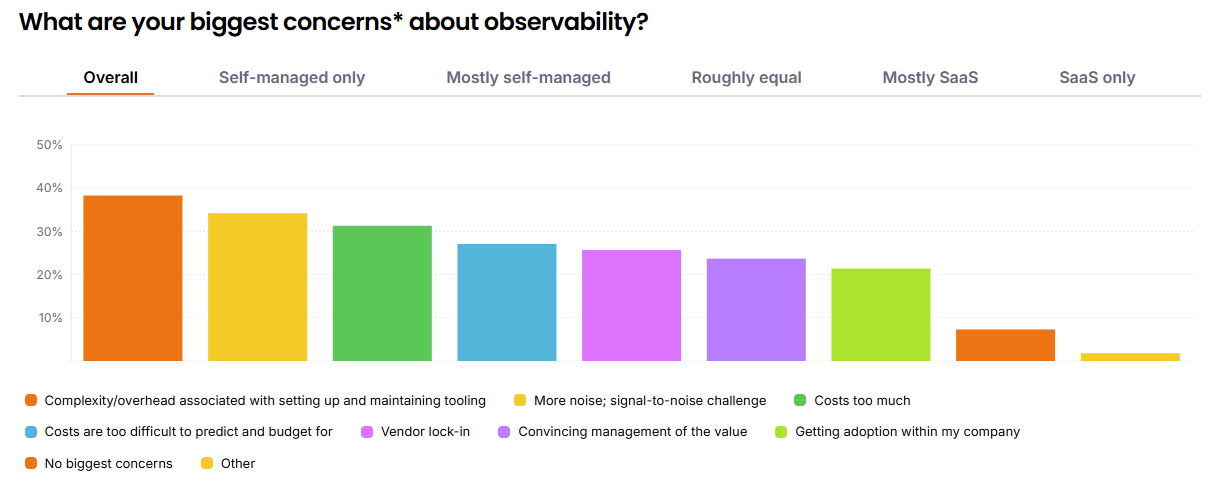
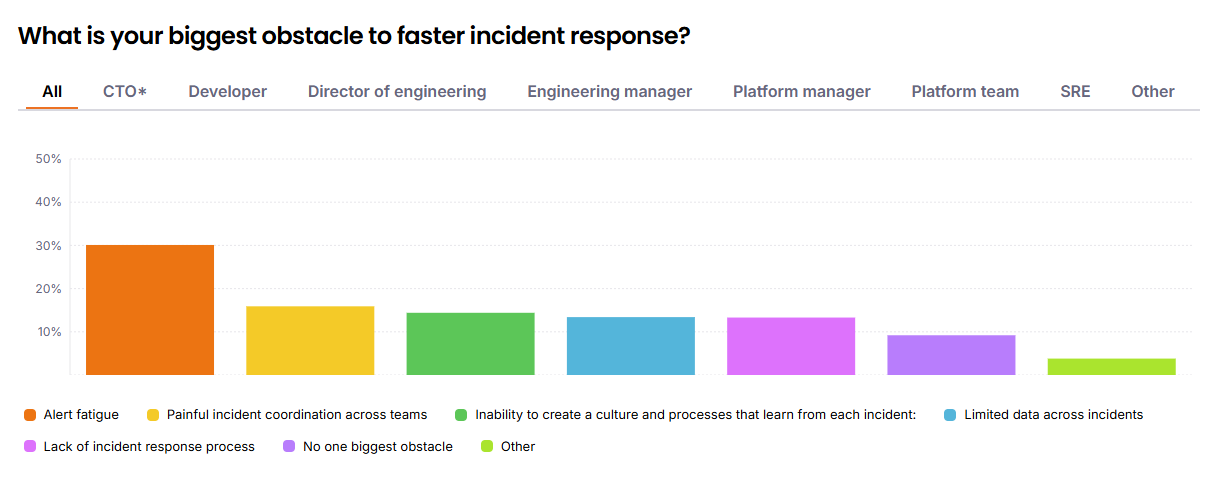
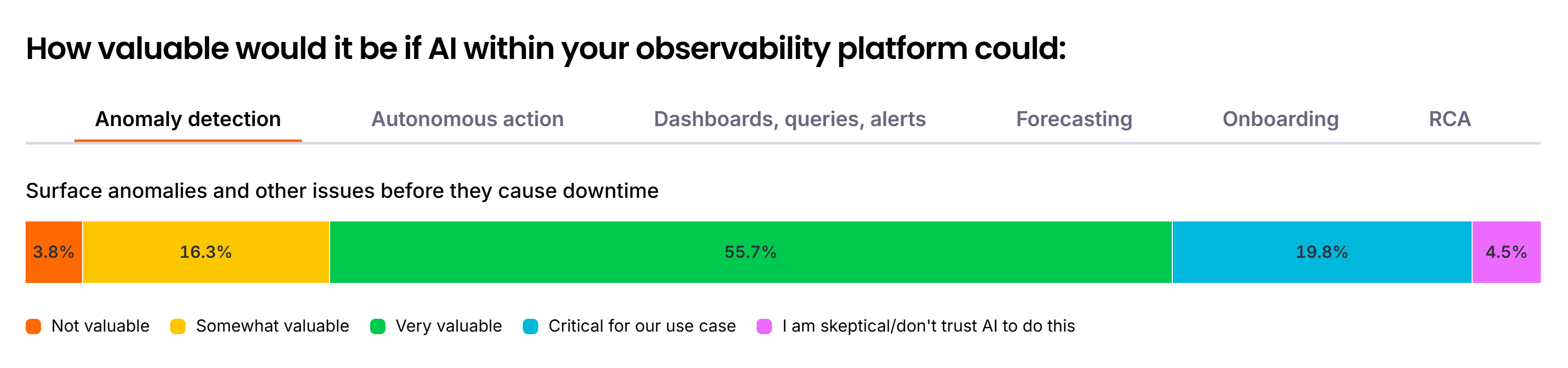
SOURCE: Grafana published their 4th Annual Observability Survey. March 2026. (Link to article)
In this free report, which is based on 1,363 responses collected by Grafana Labs through outreach to our community and at industry events around the world, you’ll get a snapshot of how organizations approach observability today and where they want the industry to go.
** This report validates our mission at SymetryML. We address the biggest pain points for Observability professionals.

I’ve come across a lot of articles about the risk to jobs from AI.
If your job is extremely process-oriented, you might be in trouble. I call it a Homer Simpson job. Homer’s job is to watch for a button to light up, then press another button in response. But it can be more complex than just a single button. If you are the valuable guy, specifically because he knows the 27 key strokes to get a certain piece of information out of the Bloomberg, your job might be in trouble. If your role is the “best Excel person” in the company, your job might be at risk.
But if you have those skills and are genuinely curious about your business and how it all fits together. You are in a great spot.
The person who is technical enough to be comfortable with the 27 Bloomberg key strokes, and technically proficient enough to be the best at Excel, then you are likely comfortable upskilling with AI and taking the most advantage of these new tools. Combine this with an understanding of the “why” of your business, and you will be an invaluable member of the team.
This guy will be looking for work: