
Alternative Data Weekly #291
Theme: Agents Don't Read. They Buy

Special thanks to our sponsor Brickroad!

Alpha isn't found in a catalog. Brickroad's information frontier agent finds alpha suppliers at the frontier - companies generating your target data who've never marketed it. Sign up for a 7-day Pro trial Here.
QUOTES
“AI is not exposing technology gaps. It is exposing operational weaknesses that already existed.” - Maribeth Martorana
News
Pods
Charts
Final Thoughts (I love email)

#1 – Didier Lopes published Why an Apps Marketplace for a Financial Workspace. May 2026.
My Take: I’ve used all the data marketplaces at various times in my career, with very little success. So this article caught my eye. Perhaps this is the moment when marketplaces will finally deliver on their long await promise due to the advent of open protocol standards like MCP. I like the idea of focusing on the workflow rather than the data (the details of which can get messy). Assuming you are working with data you can trust, yes trust still matters, the value is in the workflow.
Formal announcement from OpenBB found here.
#2 – Michael Spencer published Tensions mount over AI Consequences on the Future. May 2026.
My Take: I am an optimist on AI and think there won’t be enough humans to do all the jobs humans will create using AI. After two data- & AI-related conferences in two weeks, I think that point-of-view puts me solidly in the minority. When Citadel’s Ken Griffin is feeling “fairly depressed” after watching AI agents work, it is worth revisiting my opinion. The question is, what do these smart Citadel employees do when they are given a tool that 100x’s their productivity? These aren’t the kind of people who will work less hours. They will create new ways of working, and new ways of making money, and new ways of adding value.
#3 – CDO Magazine published What Happens When AI Agents Become Data Consumers? Monte Carlo CEO Barr Moses Explains. May 2026.
My Take: Far more data will be sold to non-humans than humans in coming years, if not months. The non-human data market will be far larger than the human data buying market in both quantity of data and value of the data being transacted. Most data sellers are not set up for this type of transaction and a massive opportunity in coming years is creating the infrastructure (governance, trust, etc) to make these types of transaction happen.
BONUS: Jody Hesch published Make Yourself Fungible. May 2026. “You get what you give. So, make giving a habit.”
What else I am reading:
Maribeth Martorana published Why Most AI Initiatives Fail Before They Scale. May 2026.
Ergest Xheblati published Creating Leverage with Data: How Nielsen Ratings Changed TV Shows and Ad Buys. May 2026.
Auren Hoffman published if you can’t get a job today, it’s your fault. May 2026.
Scott Galloway had the audience. Here’s what he came for. May 2026.
Carbon Arc announced they are launching a new consumer transaction panel.

Source: Hugo Bowne-Anderson of Delphina’s High Signal podcast interviewed Chris Fonnesbeck The 100-Year Lead: What Baseball Teaches Us About the Future of AI. May 2026.
My Take: I like baseball and have been wanting to listen to this podcast since I saw it was published.
I like how he frames “observing causes” rather than “observing outcomes”
Move from outcome-base statistics (like RBIs for a batter, or wins for a pitcher) and move towards process-based statistics (hitting the ball hard, or spin rate). The key is to focus on what is predictive vs what was random & knowing the difference. In other fields, this might be called separating signal from noise.
The Hawkeye camera seems to have been a big breakthrough that is powering all this data analysis. These are the cameras in every MLB stadium that capture everything … and I mean everything … about the game.
To me this really highlights the importance of asking the right question. Paired with a Hawkeye camera, baseball manager & a data scientist can do a lot of interesting work. In fact, the game has literally changed as a result of these questions (the shift has been outlawed, terms like “run value per event” have been invented, OPS is more important than simple batting avg).
Wouldn’t it be interesting to have a personal Hawkeye camera that can measure what you are doing and how you can do generally better in life?
HIGHLIGHTS (56-Minute Run Time)
Minute 04:00 – interview starts/Sabremetrics.
Minute 06:30 – observation data science / Bill James.
Minute 09:30 – culture change / why baseball?
Minute 18:00 – thinking differently. Methodological advancements. Hedging risks.
Minute 20:00 – the science of expressing value of a player (ie WAR).
Minute 24:00 – what’s new with baseball metrics; data collection technology.\
Minute 32:00 – skill sets needed and ways of thinking that make people good at this. Baysian thinking.
Minute 40:00 – PyMC (2 book recommendations).
Minute 45:00 – some interesting examples from baseball stats.
Minute 50:00 – is baseball a leading example for wider industry and how data will be used?
Minute 52:00 – how to get into baseball metrics.

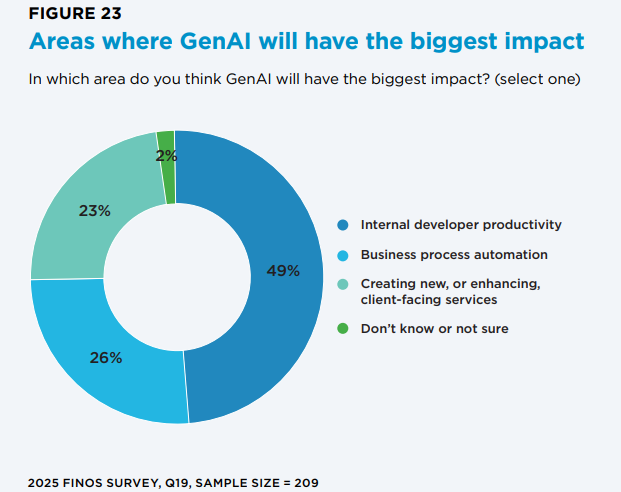
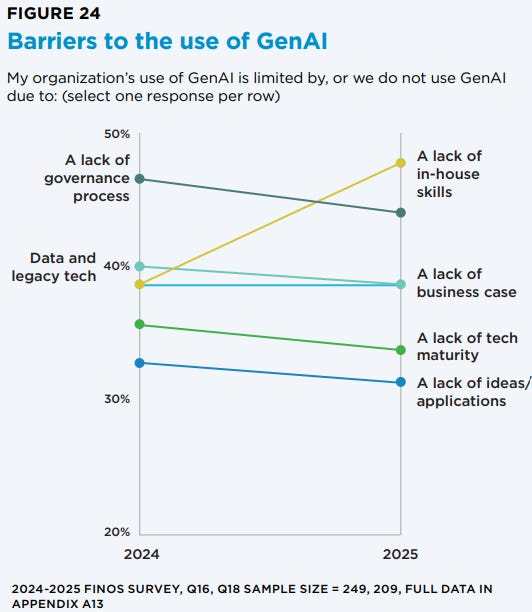
SOURCE: FINOS published The 2025 State of Open Source in Financial Services. May 2026.
Conclusion: “AI is both the fastest moving and most strategically significant open source technology for financial services. Adoption has shifted from hesitation to investment, positioning GenAI as a foundational enabler of productivity, customer experience, and innovation. Yet, challenges remain in scaling prototypes into production-ready systems and finding individuals with the skill sets that can make this happen.”

I love email.
It is my primary source of receiving information.
I jealously care for my inbox and am careful to delete useless notes and filter junk.
Much like your social media feed, if you let the information flow control you, it will become noisy and useless.
Take control, be diligent and ruthless about unsubscribing, marking junk, deleting nonsense.
Source of some inspiration for this: Tomasz Tungus published The 6 Messages That Actually Matter. May 2026.