
Alternative Data Weekly #296
Theme: The Plumbing Is Free Now

Special thanks to our sponsor Brickroad!

Alpha isn’t found in a catalog. Brickroad’s information frontier agent finds alpha suppliers at the frontier - companies generating your target data who’ve never marketed it. Sign up for a 7-day Pro trial Here.
QUOTES
“The actual product is the data and context that get captured along the way.” - Didier Lopes
News
Pods
Charts
Final Thoughts (this, not that)

#1 – Didier Lopes published Data is THE moat. June 2026.
My Take: I like the expansion beyond, 1- data you’ve licensed, and 2- your internal data … to 3- “derivative data”. This is how you combine and work with (correct, decide, combine, query) the data, that is what makes your data more valuable. Said another way, asking the best, or most unique interrogations of proprietary data is going to be a huge moat in coming years (shameless plug: SymetryML makes this easier).
See ADW #177 for early thinking on this idea … the idea that a combination of data assets that is a mosaic unique to you (and nearly impossible to replicate). AI will take the ability to uniquely combine and query disparate data assets to the next level.
#2 –Peter Baumann published Data Contracts - Putting Data Governance into Practice. June 2026.
My Take: I am seeing governance issues around who gets access to what information even at a small company like mine. I cannot imagine the complexity at a large organization. But I can imagine the power once these guardrails are in place, this makes it worth the effort.
#3 – BigEye published What is shadow AI? June 2026.
My Take: I’ve been seeing this issue discussed more frequently. People use their personal AI at work (I am guilty of this). This can create problems. Traceability, privacy, exposing confidential information … this stuff is not good.
AI is moving fast and it is nearly impossible to keep up. You need to balance 1- getting the most out of these powerful technologies and, 2-keeping a required governances perimeter around the use of these tools.
Network level blocking is tough. Good luck telling employees they can’t use AI tools. BigEye suggests the management of this should include authorized tools … tell employees to use AI, but this specific AI tool … and implementing the governance/access from the data layer, rather than the application layer. These are tough problems. These are important problems.
BONUS: Dylan Anderson published Fable and Mythos Are Here (well kinda). So What’s Next for Human Work? June 2026. “The moat isn’t the technical part anymore; it’s all the stuff that came around the technical part: the logic, the structure, the process, the implications, the action, the communication, etc.”
What else I am reading:
Auren Hoffman published disposable software: software is now just paper plates. June 2026.
Nathan Goldschlag published A New Threat to Economic Data. June 2026.
Arvind Narayanan and Sayash Kapoor published Why AI hasn’t replaced software engineers, and won’t. June 2026.
Ian King published The City of London’s vanishing analysts. June 2026.
Anthony Goldbloom published Account Scoring Should Explain, Not Just Rank. June 2026.
Dan Entrup published Vibemaxxing. June 2026.
Matt Robinson published AI Pushes Trading Into Thinner Markets. June 2026.

Source: Nicolai Tangen sits down with Sridhar Ramaswamy, CEO of Snowflake. HIGHLIGHTS: Sridhar Ramaswamy - CEO of Snowflake. June 2026.
My Take: I’ve enjoyed this podcast series. As a massive investor in everything, Norge’s CEO Nicolai Tangen gets great guests. He also lets his guests talk (which my podcast hosts don’t do). Nicolai interview style is rapid fire questions of high-level thinkers like Sridhar.
Interesting: NBIM runs 2 petabytes in Snowflake and ~3 million queries a day. Norges spent “years” cleaning up their data…
Snowflake separates storage from compute.
Software development has always been a “craft” like being concert pianists … no longer. Native coding agents are amazing.
Data more accessible. AI is helpful in the data modernization effort.
“Privacy is like exercise”. Talk about it, don’t practice.
“I process email for a living” – 24:00
Ramaswamy’s point: the manual data engineering that’s gated alt data for a decade, cleaning it, re-plumbing pipelines, migrating off legacy systems, is collapsing toward near-zero. A one-column pipeline change went from a week to an hour. Migration went from years to weeks.
Lastly, I really like the message around resilience to failure. Sridhar’s keys to good life: hard work, resilience, malleability.
HIGHLIGHTS (31-Minute Run Time)
Minute 01:00 – Snowflake background; separate storage from compute
Minute 05:00 – Anthropic as a competitor (and other competitors)
Minute 07:00 – Snowflake benefitting from AI revolution
Minute 09:00 – AI make the data you have much more accessible
Minute 10:30 – MCP
Minute 11:00 – Agents changing how you work
Minute 13:00 – barrier created by messy data (this is getting better rapidly)
Minute 15:00 – GDPR discussion
Minute 16:00 – data centers in space?
Minute 17:00 – Sridhar background (Google, Neeva, Snowflake, etc)
Minute 20:00 – how software engineering is changing
Minute 23:00 – “weekly war room”
Minute 26:00 – setting culture
Minute 27:00 – Sridhar growing up; education
Minute 30:00 – advice to young people; resilient to failure

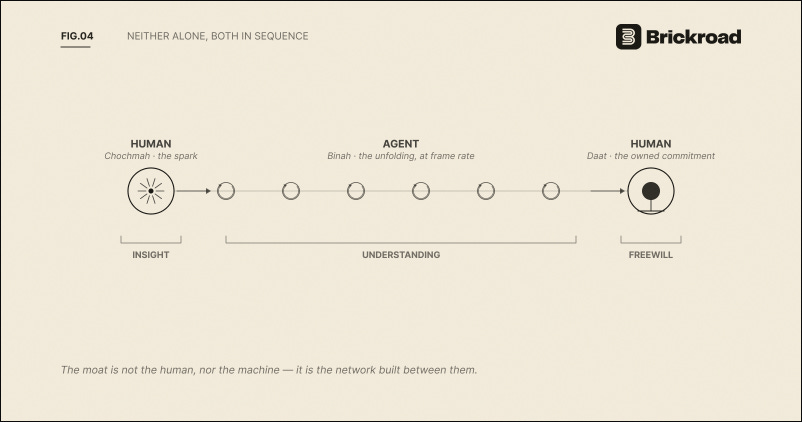
SOURCE: Freeman Lewin published Neither Alone, Both in Sequence: Human-Agent Collaboration, Intellect, and the Information Frontier
Note: Freeman Lewin’s Brickroad is also the sponsor of this week’s ADW.
My Take: This is deep. The amount of information is expanding at a rate beyond our ability to comprehend…and our efforts to harness the information increases the rate at which information grows.
Agents become the answer.
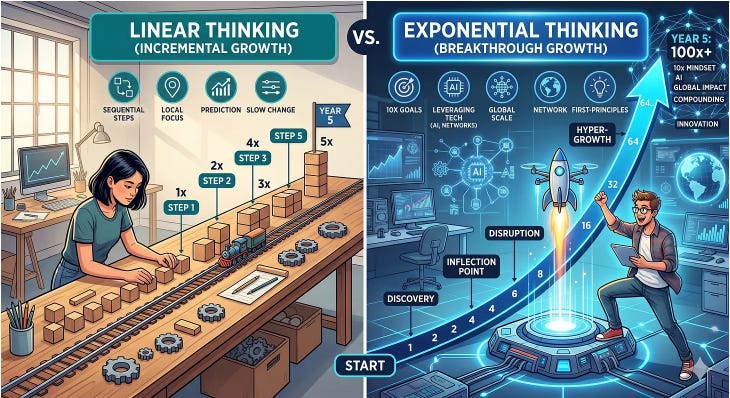
Exponential thinking is hard for humans.
BONUS: Reminds me of this article from Jordan Morrow: You Are Living in an Exponential World. Stop Thinking Linearly. June 2026

I am overwhelmed with good options.
How to pick this, not that. When is the timing just right?
Yordan Ivanov published The 4 Questions That Decide if Your Idea Deserves Your Time. June 2026.
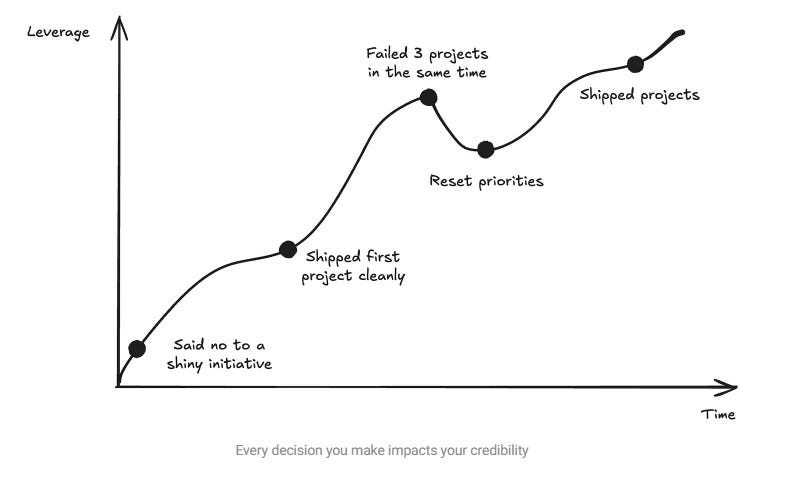
Start with the pain
Research
Think of different solutions
Talk to the people it affects
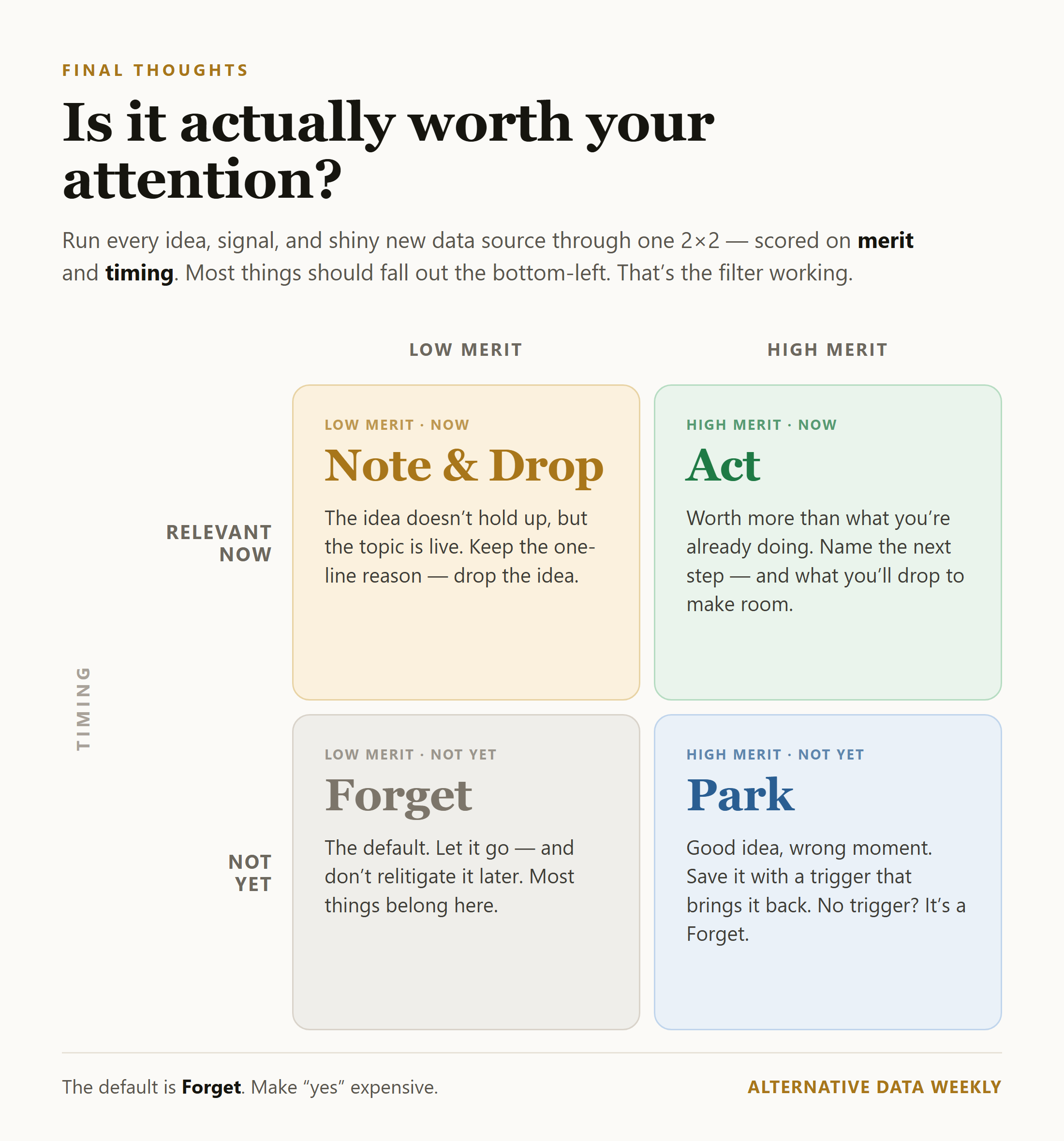
My Take: I add articles and interesting things I come across to a Claude skill I created called “crucible” … this places the article in a 2x2 box (see below).
Most things are interesting, but not urgent . Claude “notes” them and (in theory) resurfaces them when the time is right.
Example: I came across an article sharing best practices on how to most effectively market your case studies. We at SymetryML are pulling together case studies on how our tool improves engagement with massive amounts of clickstream data. We do not have this report ready at the moment. When it comes time to release the study, The theory goes that Claude should surface that relevant article (currently “parked”) and include best practices into my thought process.
Another thought:
“Unless it is a hell yes, it is no.”
Thank you for the recommendation!